In the Operating Room
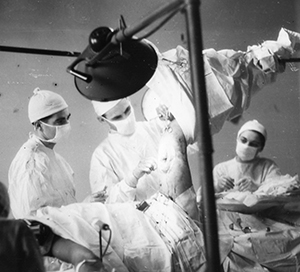
Though the doctors and nurses of the 12th General Hospital were highly skilled, battle injuries and related problems, such as cleaning maggot-infested wounds or completing an operation entirely by portable battery lamps, pushed them beyond anything they had experienced as civilians.
Over the course of three years, Northwestern specialists learned from each other and their contemporaries in other units. They adopted newly developed operations, such as secondary closures, and began to combine whole blood transfusions with medications, such as sulfa drugs and penicillin, to improve surgical outcomes. The surgeons discovered that using large incisions to expose each layer of the skin would successfully debride wounds and that tracheotomies could save lives and ease the burden placed on nurses during a patient’s convalescence.
The surgeon who undertakes the care of war wounds, even though his civilian experience may have been large, soon finds himself upon unfamiliar ground.
Surgeons spent less than two hours per operation in order to treat more patients. Easier cases were often treated first because those patients could potentially return to the front lines. In Rome and Leghorn, 12th General Hospital personnel often performed more than 100 operations a day — attending to both injuries inflicted by war and routine conditions like hemorrhoids and hernias.