Healthcare in Chicago's Early (Im)migrant Communities
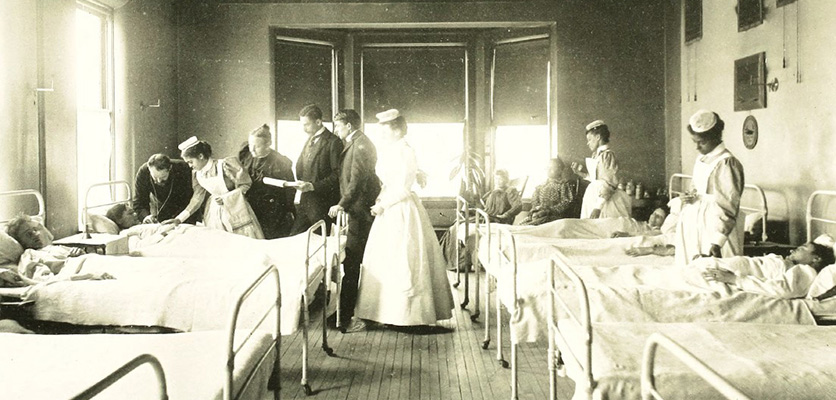
From March 13 to April 22, 2023, Galter Library hosted the National Library of Medicine’s touring exhibit Outside/Inside: Immigration, Migration, and Health Care in the United States, which explored these issues on a national scale. Galter staff curated four exhibit cases to highlight themes related to immigrants and migrants in Chicago and assembled a companion guide. Using period materials, these displays illustrate how the local medical establishment impacted millions of immigrants and migrants in the city.
Dates: March 20, 2023, to Feb. 7, 2024
Contact: ghsl-special
Content warning: this exhibit includes outdated historical perspectives and terms that are offensive, xenophobic and racist.
We have included patient perspectives where possible, but experiences from marginalized and low-income communities are often underrepresented in traditional historical records. Most primary sources come from those with power or resources, like city officials and reformers. Please contact Special Collections with any feedback about this exhibit: ghsl-special
Immigrants and migrants who came to Chicago (and other large cities) at the turn of the 20th century faced significant hardships and barriers to accessing basic necessities, including healthcare. They had to navigate a sometimes bewildering landscape offering many types of care.
When modern medical treatment failed them, they turned to their communities for traditional remedies and wisdom. When the existing medical institutions could not help them, they created their own. Sometimes they became part of the medical establishment themselves.
With so many people suddenly living in close urban quarters, infectious diseases could run rampant. Tuberculosis was especially prevalent, and medical and public health experts had many ideas about how to prevent and treat it. These ideas were perpetuated by the established educational and governmental systems that trained the physicians and implemented their policies in the city.
As one of Chicago's leading medical schools at the time, Chicago Medical College (and its successor, Northwestern University Medical School) employed and trained many men who worked in the city’s Department of Health. A survey of medical education at the time shows that students would have followed a curriculum that emphasized public health while also perpetuating a pattern of paternalistic ideas about what was best for the immigrant and migrant communities that sometimes bordered on eugenics.
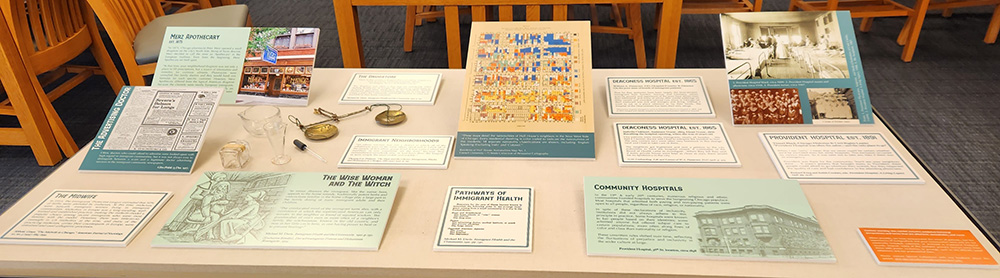
Avenues of Care
Immigrant Neighborhoods
"An ethnic enclave was not a district in which all of the inhabitants were of the same ethnic stock and in which all of the people of that ethnic group lived. It was a place where the members of one nationality set the tone, because they outnumbered everybody else, or had been there the longest, or were simply the most visible and voluble."
— Thomas Lee Philpott. The Slum and the Ghetto: Immigrants, Blacks, and Reformers in Chicago, 1880-1930. 1991. p. 135
Pathways of Immigrant Health
"Resources for the care of illness become known in somewhat the following order to the average immigrant coming from a small community to a city in the United States:
Home and Neighborhood
- The home remedy or “wise” woman
- The midwife
- The drug store
Doctors
- The advertising doctor, medical institute, or quack
- The private physician
- The lodge doctor
Organized American Agencies
- The nurse
- The hospital
- The dispensary"
—Michael M. Davis. Immigrant Health and the Community. 1921. pp. 130.
The Wise Woman and the Witch
"In minor illnesses the immigrant, like the native born, appeals to the home remedy. Traditionally potent herbs and concoctions familiar in the home village play a large part in the family dosing of many immigrant adults and their children.
The uneducated mind of the immigrant turns also, with a confidence at which the sophisticated American can only wonder, to the neighbor or friend of reputed wisdom. The grandmother of one’s own or more often of a neighbor’s family, the witchwoman, known in the old country, and now in her little circle here, as one having power to heal or to prevent healing⎯"
—Michael M. Davis. Immigrant Health and the Community. 1921. p. 130.
The Midwife
In 1915, The Immigrants’ Protective League estimated that 50% of births were attended by midwives. At this time, midwives were typically immigrant women living in immigrant communities. Midwifery in Europe was a long-standing, well-trained and established practice, making the midwife-model a popular choice among recent immigrants who were most familiar with the model. However, there was little-to-no oversight in US midwifery at the time, and many of the practicing midwives, unlike their counterparts in Europe, were untrained and used unhygienic processes.
The Drugstore
"Here in this country a druggist does everything: telephones, soda fountains, information bureau, doctor. In Hungary, he is a skilled pharmacist."
—Michael M. Davis. Immigrant Health and the Community. 1921. p. 132.
The drugstore was often a first stop for immigrants when seeking healthcare. In Europe, the pharmacist could listen to symptoms and tailor medication to the individual. Several immigrant pharmacists established pharmacies in Chicago to create a place for community and health familiar to what was available in their home countries.
Merz Apothecary, Est. 1875
In 1875, Chicago pharmacist Peter Merz opened a small drugstore on the city’s North Side. Being of Swiss descent, Merz decided to call the store an ‘Apothecary’ in the European tradition. Even from the beginning, Merz Apothecary set itself apart.
At that time, your neighborhood drugstore was not only a place to fill prescriptions, but a source of information and remedies for common ailments. Pharmacists were consulted like family doctors and they would hand mix formulas for each specific customer. However, Merz Apothecary differed from the typical American drugstore because the clientele were mostly European immigrants. Like European apothecaries, Merz focused heavily on herbal medicines and traditional formulas, which were already popular with its international customers.
The Immigrant Doctor
Depending on the community, an immigrant doctor might find a strong community of clients waiting in an immigrant community. Davis's book highlights Italian physicians being preferred by Italian patients because of the time devoted to explaining conditions and treatments, which contrasted to the rushed model of American doctors. Other immigrant communities were said to have put more trust in the American doctors than the doctors of their homelands.
The Advertising Doctor
Often, doctors who could afford to advertise were looked upon with high regard in immigrant communities, but it was not always easy to distinguish between a scam and a legitimate doctor advertising services in the immigrant community newspapers.
Community Hospitals
In the 19th & early 20th centuries, numerous religious and ethnic communities founded hospitals to serve the burgeoning Chicago populace. Most hospitals that admitted both paying and non-paying patients were open to all people, regardless of race, religion, or nationality.
In spite of these declarations of inclusivity, institutions did not always adhere to this principle in practice. Some hospitals were known to bar people based on their identities; some admitted anyone but offered subpar care to certain populations, more often along lines of color and class than nationality or religion.
These unwritten rules shifted over time, reflecting the fluctuations of prejudice and inclusivity in the wider culture at large.
Provident Hospital, Est. 1891
"Provident Hospital was often the safest—and the only place to go. When I say “only,” I mean that we never could be certain whether we’d be excluded from the white hospitals. This exclusion occurred by various means. So it was safer not to take any risks if there was an emergency.
Provident was there for the community. You’d see your neighbors there ... It wasn’t poverty that brought many to Provident; these people could afford to go wherever they wished. But they respected the quality of care and had confidence in the attending physicians."
—Timuel Black, Chicago Historian & Civil Rights Leader, on Provident Hospital:
Deaconess Hospital*, Est. 1865
"Our patients were mostly immigrants, nearly all Swedes. …We had a German doctor and I had to interpret the Swedish to him. The new comers [sic] were often very homesick in this strange land and I had to take care of them…
The neighbors got frightened and sent a petition to the city authorities to have the hospital closed. A committee of the Board of Health came to investigate…When they left they said if every private house were kept as clean as ours, there would be no epidemics in the city."
—Isabella Oakland, Assistant Nurse, 1865; Head Nurse, 1866, ecalling the hospital opening, when she was 16 years old
"Thus far they [patients] have been largely the fever-stricken immigrants from Sweden, Norway and Germany, whom scarcity, poverty and oppression of the poor have driven from their fatherland, and many of whom after untold sufferings on filthy vessels and crowded railroad cars arrive in Chicago on their westward way sick and strangers and dying, without a crust to eat or a place whereon to lay their heads. The hospital of the Deaconesses has been their only refuge."
—William A. Passavant, DD, Hospital Founder & Director, on the poor state of health of immigrant patients
*Deaconess Hospital changed its name to Passavant Memorial Hospital in 1894, and in 1972 merged with Wesley Hospital to become Northwestern Memorial Hospital.
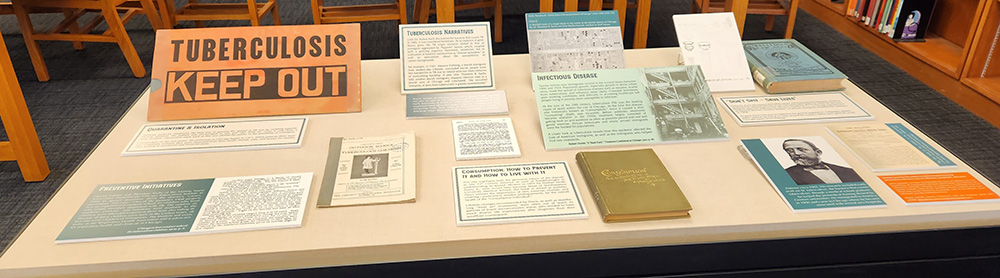
Tuberculosis
Infectious Disease
Twenty million new immigrants arrived in the United States between 1890 and 1924. Population growth, particularly in dense urban areas, increased the likelihood of the spread of infectious diseases such as measles, scarlet fever, tuberculosis and influenza. Crowded tenements, poor working conditions, and difficulty in accessing healthcare left people living in poverty more susceptible to infection.
At the turn of the 20th century, tuberculosis (TB) was the leading cause of death within the city of Chicago. At the time, this disease, also historically known as “consumption,” since it caused a slow “consuming” death, was incurable. Before antibiotic treatments became available in the 1940s, treatment largely consisted of getting fresh air and sunshine as often as possible, paired with rest and gentle exercise. African Americans and newly arrived immigrants were the hardest hit populations.
A closer look at tuberculosis reveals how this epidemic affected the lives of American immigrants, as well as the immigrants who helped find new treatments.
Tuberculosis Narratives
Until Dr. Robert Koch discovered the bacteria that cause TB in 1882, it was considered hereditary. As acceptance of germ theory grew, the TB origin narrative shifted to fear of contagion aggravated by “hygiene” factors, which, coupled with a growing eugenics movement, sometimes led to vilification of hard-hit communities as “disease spreaders,” as well as speculation about the susceptibility of certain backgrounds.
For example, in 1901, Maurice Fishberg, a Jewish immigrant from modern-day Ukraine, concluded Jewish people were less susceptible to TB due to natural selection from centuries of overcoming hardship. A year later, Theodore B. Sachs, MD, another Jewish immigrant, mapped infection rates in a Jewish area of Chicago and concluded, “the so-called immunity of Jews from tuberculosis is greatly overestimated.”
Racial notions of infection persisted over the next few decades, as evidenced by this concerned letter to the editor and its reply, published in JAMA in 1925 (see Image Gallery). Medical professionals who supported these ideas proposed several theories, including that emigrants from rural areas of Scandinavia and Ireland to American urban areas would be more susceptible to infection.
Consumption: How to Prevent It and How to Live with It
This title highlights both the pervasive nature of the disease in late 19th-century America and breakthroughs in understanding its spread. Written in 1891 by Nathan Smith Davis, Jr., who would later become Dean of Northwestern University Medical School, the book is aimed at patients. Davis stresses the importance of diet, exercise, climate, and clothing—particularly woolen undergarments, for the overall health of the “consumptive individual.”
Lifestyle changes recommended by Davis, as well as months-long “fresh air” treatments, were often out of reach to patients of lower socioeconomic status, who tended to have much shorter life expectancies after diagnosis than their wealthier counterparts.
Quarantine & Isolation
Without antibiotic treatment, the most effective way to prevent the spread of TB was to isolate patients. During isolation, the patient was encouraged to rest and take fresh air—even if only from a large window. Quarantine signs such as this one alerted the public to the possibility of contagion (see Image Gallery).
Construction on the first public TB sanitarium in Chicago began in 1911. While patients there were not completely isolated, they were separated from their families, friends, jobs and homes for months, often leading to emotional and financial stress.
“Don’t Spit – Save Lives”
Once Dr. Koch discovered that tuberculosis was transmitted by bacteria, medical professionals advised patients to spit into sanitizable spittoons. Here we see such hospital-approved spittoons for sale by V. Mueller & Co., A Chicago manufacturer of medical devices. Vinzenz Mueller, a German immigrant, founded the company in 1898 (see Image Gallery).
As germ theory gained acceptance among the general public, campaigns against public spitting emerged in cities across the country, led by agencies such as the Chicago Tuberculosis Institute.
Preventative Initiatives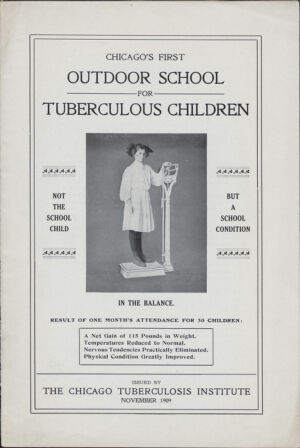
Harriet Fulmer and Theodore Sachs of the Visiting Nurse Association chartered the Chicago Tuberculosis Institute in 1906 to spread awareness about the disease’s “causes, prevention, and cure.” One of the Institute’s 1908 projects was an experimental outdoor school for children living with family members diagnosed with tuberculosis. The outdoor air, sunshine, exercise, and nutritious food available to the children were intended to prevent illness. Although all thirty children were born in the United States, only one was an immigrant. The Institute continues to exist as the Respiratory Health Association and advocates for respiratory health and clean air in Chicago.
Gustav Fütterer
Gustav Füttner, MD, conducted early research on M. tuberculosis, the bacterium that causes tuberculosis. Though a medical school graduate, he lacked the premedical training desired by German universities. He immigrated to America in 1890 and relocated to Chicago, where he became affiliated with several local hospitals. The first issue of The Bulletin of the Northwestern University Medical School featured an article introducing Fütterer, the newly appointed Professor of Pathology, and listed his bona fides as an infectious disease expert

Medical Education
Public Health in Medical Education
Beginning in the 1880s, Chicago’s burgeoning immigrant population led to numerous cultural changes, which are reflected in the medical school curriculum. To prepare future physicians for work in diverse communities, Northwestern continually adapted its public and community health coursework to address the needs of its surrounding populations.
In the 19th and early 20th centuries, Northwestern medical students learned primarily through structured coursework, such as lectures and demonstrations. As pedagogical techniques transformed, educational offerings expanded to be more patient-centric, hands-on, and culturally inclusive. Today, Northwestern is adjusting its curriculum to address the evolving health needs of a changing demographic in the Chicago area and beyond.
Since the medical school’s founding, the educational resources used to teach hygiene, sanitation and community health have undergone significant changes. The list of courses and departments below highlights that shift as well as the change in terminology:
- 1859-1868 - Pathology & Public Hygiene
- 1868-1875 - Hygiene/Public Hygiene
- 1875-1882 - Medical Jurisprudence & Hygiene
- 1882-1892 - State Medicine & Public Hygiene
- 1892-1909 - Etiology & Hygiene
- 1909-1921 - Sanitary Science
- 1921-1942 - Public Health in the Dept. of Medicine
- 1942-1951 - Public Health in the Dept. of Bacteriology & Immunology
- 1951-1972 - Preventive Medicine & Public Health in the Dept. of Medicine
- 1972-today - Community Health & Preventive Medicine
A Common Tongue
In the early 20th century, the medical school required prospective students to complete at least one year of foreign-language coursework prior to admission. The suggested languages were Ancient Greek, Latin, German, and French, indicating that language proficiency was intended primarily for reading medical literature rather than for speaking with patients. There is, however, evidence that students themselves filled this educational gap. The 1907 student yearbook included an extracurricular Colloquial German class intended for “men previously unacquainted with the language…to carry on intelligible and intelligent communication with any ordinary patient.” The course was taught by a recent graduate and attracted over 40 students.
Several studies have shown that language concordance leads to improved health outcomes, and while our patients come from many different places and speak a multitude of languages, Spanish is one of the most spoken languages among patients with limited English proficiency.
Article: Feinberg Offers Medical Spanish Courses for Students"
—Erika Arias, Medical Scientist Training Program student on the Spanish language courses at Feinberg
Clinical Experience
The South Side Dispensary was founded to provide medical care for the poor while serving as an educational resource for medical students. Initially, the faculty presented cases to students at weekly clinics; later, students completed service rotations in which they observed and practiced physical examination, diagnosis, and treatment. While the free dispensary service model ended in 1975, today’s MD students enter clinical training in the first few weeks of their program, continuing and building upon the medical school's legacy of clinical education.
The format of this casebook (not pictured here) reflects the long-held belief that race and ethnicity are integral data points for diagnosing and treating patients, though the ‘Nativity’ field was not always utilized.
Textbooks
These texts have been excerpted from public health textbooks that were once used in Northwestern's curriculum.
Their language, focus and tone differ significantly from current standards of practice. Some of these texts situate the cause of disease in the temperament, personal mores, race and/or nativity of individual patients. Others recognize that external factors contribute to health disparities in low-income, overcrowded neighborhoods and call for greater government attention. Most texts, however, advocate for assimilation and posit viewpoints ranging from well-intentioned but misguided paternalism to outright eugenics.
1893-1894 assigned textbook
In the event of the arrival of a ship infected with Asiatic cholera, or suspected of such infection, a much more difficult problem confronts the quarantine officer, for the conditions differ widely from those obtaining in the case of the yellow fever ship. In a majority of cases the cholera ship carries a large number of passengers, a great majority of whom belong to the immigrant class, and the difficulty of handling these is largely increased by the carelessness of their personal habits, their ignorance and disregard of the first laws of personal hygiene, and the discomfort, crowding, and bad sanitary condition of their quarters on board ship. Here many sources of danger must be looked into, and it is almost certain that a disregard of any one of them will be followed by a terrible retribution in the shape of new outbreaks of the disease.
—George H. Rohe, Text-Book of Hygiene, 1894, p. 486-7
1900-1910 assigned textbook
With regard to the influence of race on disease in general, there is more or less disagreement of opinion, though in several special instances there is striking evidence in favor of such a relation. There is a general consensus of opinion that the negro is less susceptible to yellow fever and malaria than the white man, and the white man less susceptible to pulmonary troubles and cholera than the black man; that the German oftener falls a prey to cancer than his Celtic cousin; and that the Jew escapes more frequently from disease of a tuberculous nature and from epidemic disease than does any other race of mankind. But when we attempt to carry the investigation further confusing factors, varying in the degree of their importance, are encountered, and the results obtained cannot be considered as entirely reliable for purposes of generalization. It is probable that there is no disease to which mankind is liable from which any race of man possesses absolute natural (i.e., congenital) immunity.
—A.C. Abbott, The Hygiene of Transmissible Diseases, 1901, p. 35
1920s assigned textbooks
We have been far too careless of the welfare of recently landed immigrants. There seems to be a general impression that, however unsanitary their surroundings or heavy may be the burdens placed upon them, immigrants are in some way fitted for such hardships, either by nature or through previous experiences in their homes. Of course, this assumption is without justification and it is time that the social, economic, physical, and moral welfare of these newcomers be given the earnest attention of the federal and state governments and of societies and individuals. By so doing something may be done to lessen the disproportionate prevalence of mental disease in this large group of our population.
—M. J. Rosenau, Preventive Medicine and Hygiene, 1916, p. 354.
In general the field of public health work may be said to have the following scope:
(a) Improved personal hygiene of all individuals, including better standards of personal cleanliness, better dietaries, reasonable working hours, recreation and adequate clothing.
(b) Improved standards of domestic and public sanitation, including relief from overcrowding, proper illumination, heating and ventilation, water supply, excreta disposal, etc.
(c) Improved sanitation of places of employment.
(d) The immunization of susceptible persons and the control of infected persons.
(e) The improvement of the breeding stock of the human race by the elimination of the physically and mentally unfit from reproduction.
(f) The provision of facilities for aiding physicians in the diagnosis and care of their patients, i.e. laboratories, hospitals and clinics.
—Mark F. Boyd, Practical Preventive Medicine, 1920, p. 21.
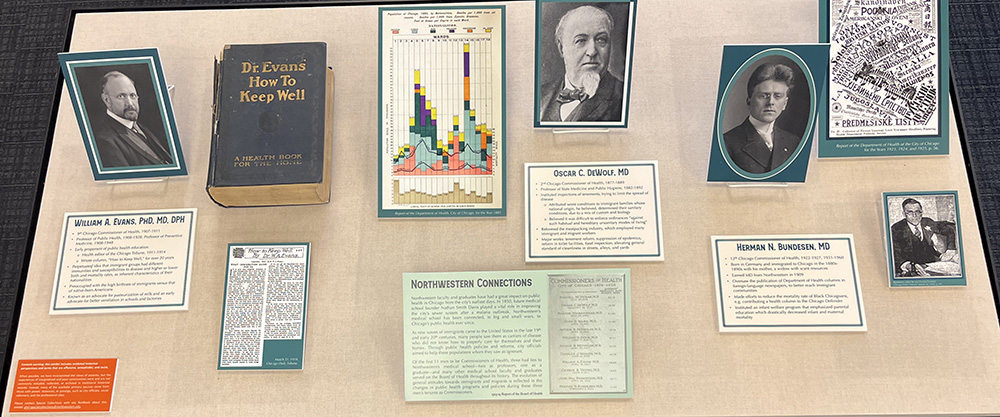
Northwestern Connections
Northwestern faculty and graduates have had a great impact on public health in Chicago from the city’s earliest days. In 1850, future medical school founder Nathan Smith Davis played a vital role in improving the city’s sewer system after a malaria outbreak. Northwestern’s medical school has been connected, in big and small ways, to Chicago’s public health ever since.
As waves of immigrants arrived in the United States in the late 19th and early 20th centuries, many viewed them as disease carriers who lacked proper care for themselves and their homes. Through public health policies and reforms, city officials sought to help populations they perceived as ignorant.
Of the first 11 men to serve as Commissioners of Health, three had ties to Northwestern’s medical school—two as professors and one as a graduate—and many other medical school faculty and graduates served on the Board of Health throughout its history. The evolution of general attitudes towards immigrants and migrants is reflected in changes to public health programs and policies during the three men’s tenures as Commissioners.
Oscar C. DeWolf, MD
- 2nd Chicago Commissioner of Health, 1877-1889
- Professor of State Medicine and Public Hygiene, 1882-1892
- Instituted inspections of tenements, trying to limit the spread of disease
- Attributed the worst conditions to immigrant families whose national origin, he believed, determined their sanitary conditions, due to a mix of custom and biology
- Believed it was difficult to enforce ordinances “against such habitual and hereditary unsanitary modes of living.”
- Reformed the meatpacking industry, which employed many immigrant and migrant workers
- Major works: tenement reform, suppression of epidemics, reform in toilet facilities, food inspection, elevating the general standard of cleanliness in streets, alleys, and yards
William A. Evans, PhD, MD, DPH
- 9th Chicago Commissioner of Health, 1907-1911
- Professor of Public Health, 1908-1928; Professor of Preventive Medicine, 1908-1948
- Early proponent of public health education
- Health editor of the Chicago Tribune, 1911-1914
- Wrote column, “How to Keep Well,” for over 20 years
- Perpetuated the idea that immigrant groups had different immunities and susceptibilities to disease and higher or lower birth and mortality rates, as inherent characteristics of their nationalities
- Preoccupied with the high birthrate of immigrants versus that of native-born Americans
- Known as an advocate for pasteurization of milk and an early advocate for better ventilation in schools and factories
Herman N. Bundesen, MD
- 12th Chicago Commissioner of Health, 1922-1927, 1931-1960
- Born in Germany and immigrated to Chicago in the 1880s-1890s with his mother, a widow with scant resources
- Earned an MD from Northwestern in 1909
- Oversaw the publication of Department of Health columns in foreign-language newspapers to better reach immigrant communities
- Made efforts to reduce the mortality rate of Black Chicagoans, e.g., contributing a health column to the Chicago Defender
- Instituted an infant welfare program that emphasized parental education, which drastically decreased infant and maternal mortality
Credits
Curated by Katie Lattal, MA, Special Collections Librarian; Emma Florio, MLIS, Special Collections Library Assistant; Ramune Kubilius, MALS, AHIP-D, Collection Development/Special Projects Librarian; Lindsey O’Brien, MSLIS, Cataloging & Metadata Librarian; and Annie Wescott, MLIS, Research Librarian.
Designed by Katie Lattal and Emma Florio.
Bibliography
Avenues of Care
- History of Medicine and Surgery, and Physicians and Surgeons of Chicago. Physicians and Surgeons of Chicago. Chicago: The Biographical Publishing Corporation, 1922.
- "The Neoplasm." The Neoplasm. (1907).
- Prominent Physicians, Surgeons, and Medical Institutions of Cook County in the Closing Year of the Nineteenth Century : With Biographical Sketches. Chicago, Ill: Redheffer Art Publishing Co., 1899.
- Abbott, Grace. "The Midwife in Chicago." The American journal of sociology 20, no. 5 (1915): 684-99. https://doi.org/10.1086/212436
- "Our Story." Updated 2023, 2018, https://www.merzapothecary.com/our-story/
- Association, American Medical. "American Medical Directory," (1906): 32 v.
- Brown, Vernon K. The Story of Passavant Memorial Hospital, 1865 to 1972. Chicago, Ill: Northwestern Memorial Hospital, 1976.
- Clough, Joy. In Service to Chicago: The History of Mercy Hospital. 1979.
- Davis, Michael M. Immigrant Health and the Community. Americanization Studies,V. 5. New York, London: Harper & brothers, 1921. https://catalog.hathitrust.org/Record/002459252
- Gerberding, G. H., and W. A. Passavant. Life and Letters of W.A. Passavant, D.D. 4th ed. Greenville, Pa: Young Lutheran Co., 1906.
- Gordon, Sarah. All Our Lives : A Centennial History of Michael Reese Hospital and Medical Center, 1881-1981. Chicago: Michael Reese Hospital and Medical Center, 1981.
- Hull House (Chicago, Ill.). "Nationalities Map No. 1." 1895.
- Krieg, Richard M., and Judith A. Cooksey. Provident Hospital : A Living Legacy. Chicago, Illinois: Provident Foundation, 1998.
- Philpott, Thomas Lee. The Slum and the Ghetto : Immigrants, Blacks, and Reformers in Chicago, 1880-1930. American Society and Culture Series. [Wadsworth ] ed. Belmont, Calif: Wadsworth Pub. Co., 1991.
- Rösslin, Eucharius. Der Schwanngeren Frawen Und Hebammen Rosengarte. Heinrich Steiner, 1529. https://books.google.com/books?id=FHKjzQEACAAJ
- Wukas, Mark, Doris Overboe, and Ronald R. Manderschied. The Worn Doorstep : Informal History of Northwestern University Settlement Association, 1891-1991. Chicago, Ill. (1400 Augusta Boulevard, Chicago 60622): The Association, 1991.
Tuberculosis
- "Dr. Gustav Futterer." The Bulletin of the Northwestern University Medical School 1, no. 1 (1899): 3-5.
- "Tuberculosis among Scandinavians ". JAMA : the journal of the American Medical Association 84, no. 3 (1925): 223.
- Davis, Michael M. Immigrant Health and the Community. Americanization Studies,V. 5. New York, London: Harper & brothers, 1921. https://catalog.hathitrust.org/Record/002459252
- Davis, N. S. Consumption : How to Prevent It and How to Live with It : Its Nature, Its Causes, Its Prevention, and the Mode of Life, Climate, Exercise, Food, Clothing Necessary for Its Cure. Philadelphia: F. A. Davis, publisher, 1891.
- Hunter, Robert. Tenement Conditions in Chicago : Report. Chicago: The Association, 1901.
- Sachs, Theodore B. "Tuberculosis in the Jewish District of Chicago." JAMA : the journal of the American Medical Association XLIII, no. 6 (1904): 390-95. https://doi.org/10.1001/jama.1904.92500060001h.
- Wing, Frank E. Report on Chicago's First Outdoor School for Tuberculous Children. Chicago: Chicago Tuberculosis Institute, 1909.
Medical Education
- Abbott, Alexander Crever. The Hygiene of Transmissible Diseases; Their Causation, Modes of Dissemination, and Methods of Prevention. Philadelphia: W. B. Saunders, 1901.https://catalog.hathitrust.org/Record/008679128
- Boyd, Mark F. Practical Preventive Medicine. Philadelphia and London: W. B. Saunders company, 1920. https://catalog.hathitrust.org/Record/001581577
- Davis, Michael M. Immigrant Health and the Community. Americanization Studies,V. 5. New York, London: Harper & brothers, 1921. https://catalog.hathitrust.org/Record/002459252
- Rohé, George H. Text-Book of Hygiene: A Comprehensive Treatise on the Principles and Practice of Preventive Medicine from an American Stand-Point. Philadelphia: Davis, 1894. https://catalog.hathitrust.org/Record/006554705
- Rohman, Melissa, "Feinberg Offers Medical Spanish Courses for Students," Education News, 2022.
- Rosenau, M. J. Preventive Medicine and Hygiene. New York and London: D. Appleton and company, 1916. https://catalog.hathitrust.org/Record/001581624
- Sims, Ron, "A Brief History of Northwestern’s Dispensaries and Outpatient Clinics: Part 1, 1859-1925," News. Galter Health Sciences Library & Learning Center, 2011, https://galter.northwestern.edu/news/a-brief-history-of-northwesterns-dispensaries-and-outpatient-clinics-part-1-18591925
Northwestern Connections
- Andreas, A. T. History of Chicago. From the Earliest Period to the Present Time. Chicago: A. T. Andreas, 1884.
- Benjamin, Georges C., Elizabeth Fee, and Theodore M. Brown. "William Augustus Evans (1865-1948): Public Health Leader at a Critical Time." American journal of public health (1971) 100, no. 11 (2010): 2073-73. https://doi.org/10.2105/AJPH.2010.191825
- Bennett, James O'Donnell. "Chicago Gangland: The True Story of Its Murders, Its Vices, and Its Reprisals Distributors of Death Debauch Decent Citizens Distributors of Death Debauch Decent Citizens." Chicago Daily Tribune (1923-1963) (Chicago, Ill.), Mar 24 1929, 2-h1.
- Chicago. "Report of the Department of Health of the City of Chicago." (1871): v. https://catalog.hathitrust.org/Record/000528191
- Davis, Michael M. Immigrant Health and the Community. Americanization Studies,V. 5. New York, London: Harper & brothers, 1921. https://catalog.hathitrust.org/Record/002459252
- Evans, W. A. Dr. Evans' How to Keep Well : A Health Book for the Home. New York: D. Appleton & Co., 1917.
- ———. "How to Keep Well: Health and Racial Stocks." Chicago Daily Tribune (1872-1922) (Chicago, Ill.), Dec 28 1919, 1.
- ———. "How to Keep Well: What Immigration Gains for Us." Chicago Daily Tribune (1872-1922) (Chicago, Ill.), Mar 21 1919, 8.
- Garb, Margaret. "Health, Morality, and Housing: The "Tenement Problem" in Chicago." American journal of public health (1971) 93, no. 9 (2003): 1420-30. https://doi.org/10.2105/AJPH.93.9.1420
- Health, Chicago Department of Public. Healthy Chicago: Historical Highlights of Public Health in Chicago, 1834-2012. (2012).