Skin, Bones & Tissue
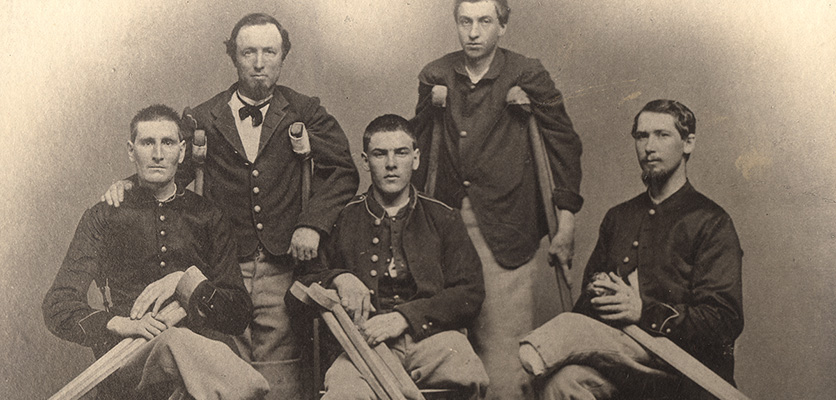
Amputations during the Civil War
Dates: April 27 to Oct. 16, 2017
Contact: ghsl-special
Advances in military technology during the American Civil War, especially the invention of the rifled musket (which allowed for more accurate firing) and the Minié ball (a bullet with a cylindrical body and pointed convex nose that penetrated more deeply and could shatter bone), led to devastating wounds that often required amputation of a limb. Around 60,000 amputations were performed during the four years of the Civil War, accounting for three-quarters of all surgical operations during the war (Figg 1993).
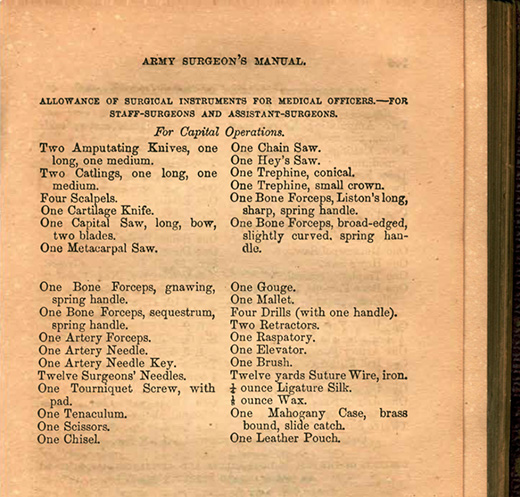
The objects and books used in this display highlight the tools and techniques used for those amputations. As a companion to the traveling exhibit Life and Limb: The Toll of the American Civil War from the National Library of Medicine, it demonstrates the grisly realities of the thousands of amputations performed, on and off the battlefield, during the Civil War.
The Army Surgeon
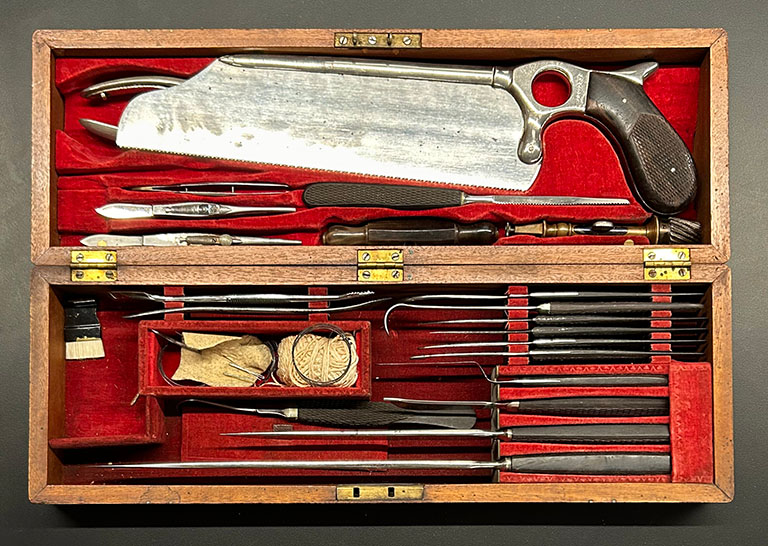
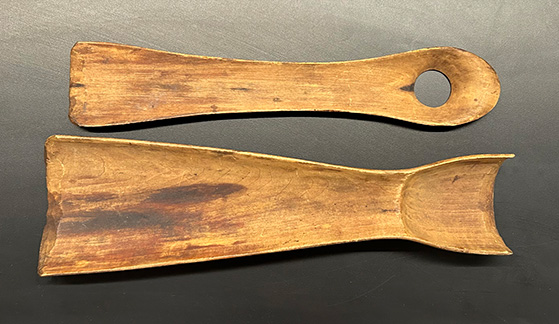
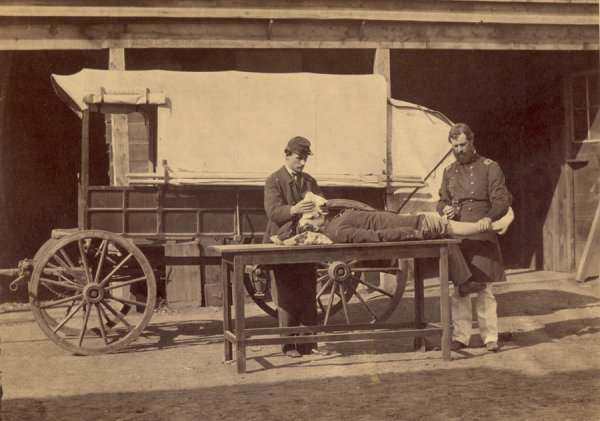
Common Amputations
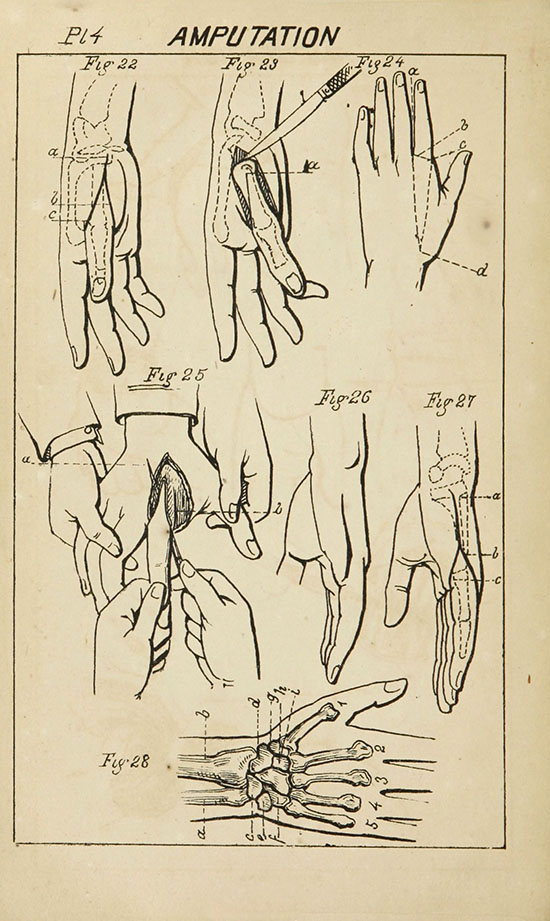
The most frequently amputated appendages during the American Civil War were fingers and toes. The Union, alone, reported an estimated minimum of 9421 hand, finger, foot, and toe amputations during the course of the war (Figg 1993).
Shown here are illustrations of various finger amputation techniques, such as the removal of the second metacarpal by the oval method (see Figure 25, plate 4).
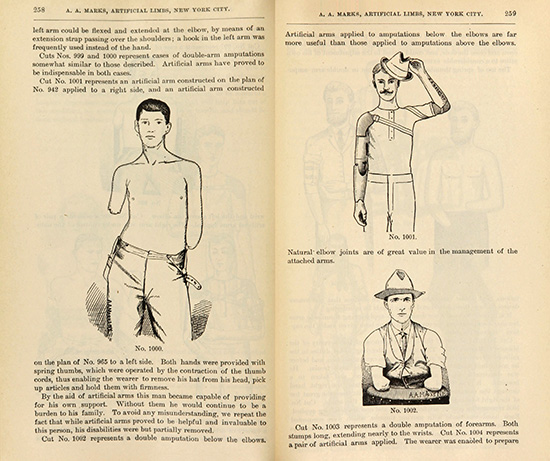
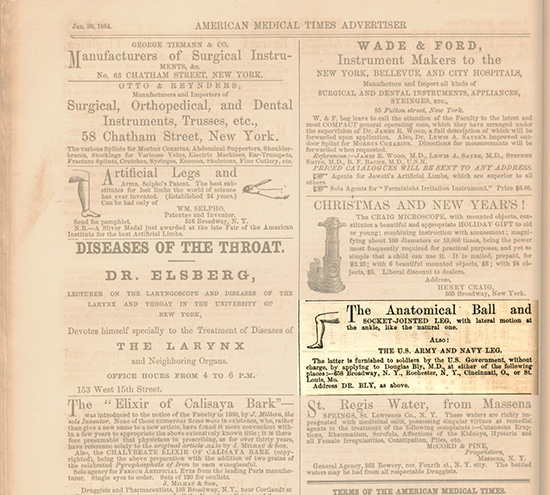
Artificial Limbs
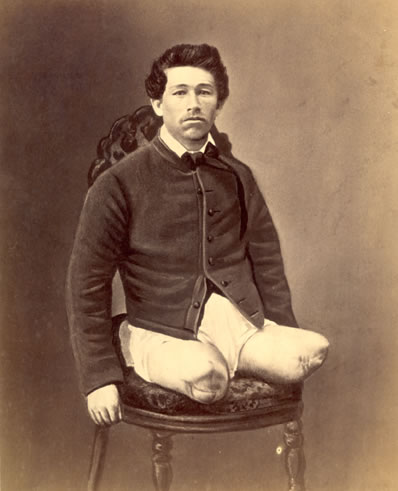
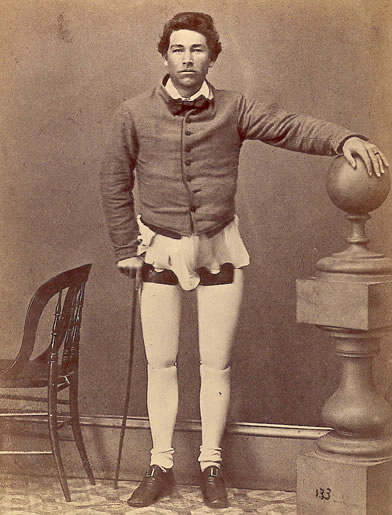
Private Columbus Rush
Private Columbus Rush, Company C, 21st Georgia, age 22, was wounded during the assault on Fort Stedman, Virginia, on March 25, 1865, by a shell fragment that fractured both the right leg below the knee and the left kneecap.
Both limbs were amputated above the knees on the same day. He recovered quickly and was discharged from Lincoln Hospital in Washington on Aug. 2, 1865. In 1866, while being treated at St. Luke’s Hospital in New York City, he was outfitted with artificial limbs.
Credits
Curated and designed by Ramune Kubilius, MALS, AHIP, Collection Development/Special Projects Librarian; Corinne Miller, MLIS, Clinical Informationist; and Q. Eileen Wafford, MSt, MLIS, AHIP, former Research Librarian.
Bibliography
- The American medical times being a weekly series of the New York journal of medicine. New York: Baillière Brothers 8, no. 5 (January 30, 1864).
- Chisolm, Julian John. A Manual of Military Surgery : Prepared for the Use of the Confederate States Army. Richmond, Va: Ayres & Wade, Illustrated News Steam Presses, 1863.
- Figg, Laurann, and Jane Farrell-Beck. "Amputation in the Civil War: Physical and Social Dimensions." Journal of the history of medicine and allied sciences 48, no. 4 (1993): 454-75. https://doi.org/10.1093/jhmas/48.4.454
- Grace, William. The Army Surgeon's Manual; for the Use of Medical Officers, Cadets, Chaplains, and Hospital Stewards Containing the Regulations of the Medical Department, All General Orders from the War Department, and Circulars from the Surgeon-General's Office from January 1st, 1861, to April 1st, 1865. 2d ed. New York: Baillière, 1865.
- Marks, George E. A Treatise on Artificial Limbs with Rubber Hands and Feet. New York: A.A. Marks, 1902